The majority of pieces that talk about postnatal recovery start the timer as soon as your little one makes their entrance into the world. Six Weeks Post-Natal Check , Continue Pelvic Floor Exercises. Slow strolls when such feels right. Nutrition tips for healing. Helpful, but late.
And when there’s time to have a proper conversation, here’s what midwives and pelvic health physiotherapists will tell you: the pace of your recovery is largely determined long before your baby arrives. The intrinsic strength you take to labour with you, the way you’ve taught your pelvic floor to facilitate release (not just clench), how high in iron your levels are, how you sleep and what your bending techniques look like! All of it compounds.
Most articles are missing that part. They pretended that postpartum recovery begins day one. It doesn’t. Well, that begins immediately at around the 14-week mark, and you can feel that your body is a solid enough vessel to build upon; not too big for your little baby yet.
The incorrect mental model of bouncing back for Postnatal Recovery

The phrase ‘bounce back’ is incredibly damaging. Which means this corpus is rubber, and that recovery is a once-in-a-lifetime show. Neither is true. After birth, what is actually taking place is a whole body rehabilitation: your uterus contracting back down, your abdominal wall re-knitting together (should it even be busted apart), your pelvic floor recalibrating to its new home, your hormones regrouping and tuning up, and the two generations of blood volume returning to normal. These biological processes are redundant, each with its own timeline.
This is described as rehab, not recovery, by physiotherapists working with postnatal women. Just like after even minor surgery, you might not expect to run around a week later, and the same applies to birth. The fastest women are never those who try the hardest afterwards. They’re also the reason other women come to labour with a prepared body.
Read the full guide on Diastasis Recti Treatment After Pregnancy
💡 What Most Generic Guides Won’t Tell You ?
Your postnatal recovery is not a separate project from your pregnancy. It’s the second half of the same project. How quickly your pelvic floor rebounds, how fast your core re-engages, how well your back holds up under feeding and lifting — all of it is laid in the 26 weeks before your baby arrives, not the 6 weeks after. The NHS postnatal check at week 6 is not a starting line. It’s roughly the halfway point.
What’s actually happening to your body during pregnancy
Understanding what your body is doing makes it easier to support it. Three big shifts matter most for recovery.
Your abdominal wall stretches. The two vertical muscles that run down your midline, the ones people call the six-pack, separate to make room for your growing uterus. This is called diastasis recti, and some degree of separation happens in every pregnancy. In most women, it closes on its own in the first eight weeks after birth. In roughly one in three, it doesn’t fully close and needs targeted work.
Your pelvic floor takes the load. The bunch of muscles at the base of your pelvis is carrying the weight of your baby, your placenta, extra fluid and your uterus. Hormonal changes soften the connective tissue, which is useful for birth but means the floor is less springy than usual.
Your posture quietly shifts. Your centre of gravity goes forward as your bump grows. Your lower back compensates by curving more, your ribs flare, and your shoulders round. After birth, this adjusted posture often stays in place even after your bump is gone, and that’s a big reason so many new mums develop back pain.
Each of these is reversible, and how fast it depends on what you do now.
The pelvic floor piece most women get wrong.

Most pregnancy guides recommend performing Kegels. And it’s only half the instruction, and the part that counts most in recovery is in that other half.
An inner abdomen that has only strength is a threatened pelvic floor. Having a tight pelvic floor going into labour makes it more difficult to push, causes more tearing, and takes longer to recover from. These are the muscles that should be able to pull and push as we tighten and finally relax.
The fix is fairly easy, but not often taught. At the end of each squeeze, mindfully release. Visualise your pelvic floor softening down, like a lift going to the ground floor. Perform the release as intentionally as the contraction. Fewer repetitions (big moves), but I am doing them correctly.
Women over forty, especially those who may suspect pelvic floor issues, can reach out to a women’s health physiotherapist for a thorough assessment of whether their pelvic floor is too weak, too tight, or not coordinated enough, and receive a helpful protocol tailored to their condition. You can be referred by your GP through the NHS,, and there are many areas where you can self-refer. That’s one of the most precious references in pregnancy, and hardly any requests to obtain it.
Nutrition that actually supports postnatal recovery

Your postnatal recovery draws heavily on whatever nutrient stores you build during pregnancy, and most UK women arrive at birth depleted in at least one key area.
Iron is the most common. During childbirth, it’s normal to lose blood—and you’ll notice that decline much more if your iron stores are already depleted: fatigue, breathlessness, foggy thinking, and slower healing of wounds. Do not just get your iron levels checked at the booking bloods; also request them to be done in your third trimester. If your midwife says you need to supplement, do it.
Protein is the second. Your body is about to do some major rebuilds of tissue: the uterine lining, the abdominal fascia and potentially perineal repair. Protein is the raw material. UK guidelines for carbohydrates are approximately 50g a day, which should be seen as the lowest acceptable limit, not a target. Third-trimester and early postpartum women who consume higher protein heal faster.
Third is hydration, and many pregnant women are underhydrating. Aim for pale straw-coloured urine. This becomes increasingly important if you are breastfeeding (not less).
| Metric | What is does ? | The Source |
|---|---|---|
| Iron | Replaces blood lost at birth; supports energy | Red meat, sardines, lentils, spinach, fortified cereals |
| Protein | Rebuilds tissue, supports wound healing | Eggs, chicken, Greek yoghurt, tofu, chickpeas |
| Calcium | Supports bone recovery, breastmilk production | Dairy, tinned fish with bones, kale, fortified plant milk |
| Omega-3 | Reduces inflammation, supports mood | Oily fish (salmon, mackerel), walnuts, flaxseed |
| Vitamin D | Bone health, immune function | Oily fish, eggs, fortified foods; NHS supplement advised Oct–Apr |
| Fibre | Prevents constipation, common after birth | Oats, beans, pulses, wholegrains, fruit |
Movement that prepares you for labour and recovery
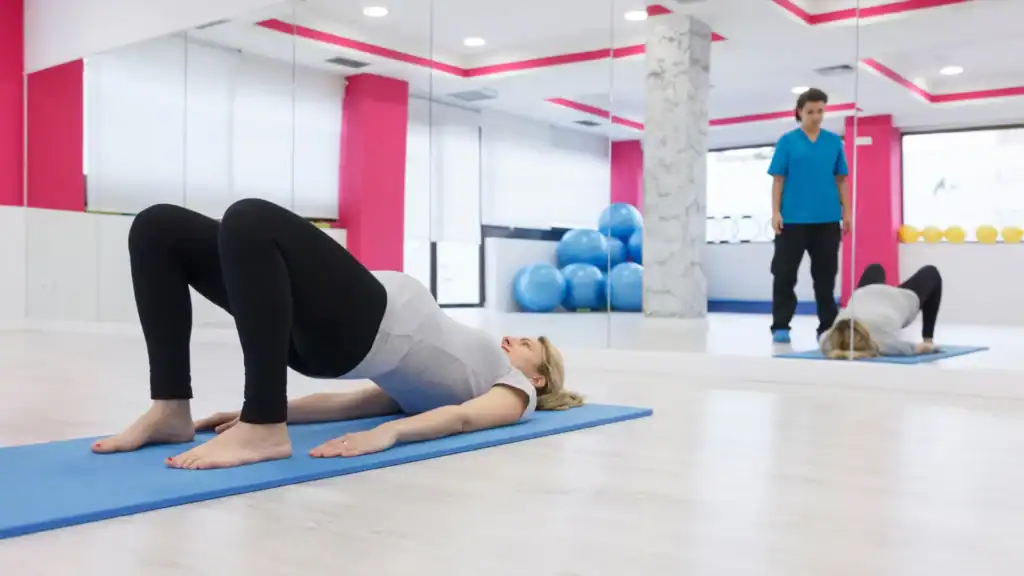
Regular movement through pregnancy is one of the strongest predictors of a faster recovery. The UK Chief Medical Officers recommend around 150 minutes of moderate activity a week across pregnancy, broken into whatever chunks fit your life.
One form of exercise that is most underrated during pregnancy but should actually be the greatest is walking. This keeps your hips moving, supports circulation (vital for reducing clots), and primes your cardiovascular system for the marathon of labour. Twenty to thirty minutes most days should suffice.
Dedicated pregnancy strength work keeps muscles connected to the movements that will do most of the recovery work—glutes, deep core, upper traps and so on. Squats, glute bridges, bird-dogs or wall-supported press-ups. A certified prenatal trainer can help you practice proper form.
Pelvic mobility work, like hip circles on a birth ball, cat-cows and gentle lunges, keeps the pelvis flexible and open, which means less post-birth stiffness.
After the second trimester, avoid lying flat on your back for extended periods, anything that causes doming of the abdomen (which increases diastasis), and high-impact bouncing if your pelvic floor is already feeling heavy. If a movement doesn’t feel right, it isn’t right.
Sleep and rest, the quiet accelerator
Sleep is where most of your body’s repair work happens, and pregnancy sleep is notoriously broken. The sleep debt you accumulate in pregnancy carries straight into postpartum, when you’ll have even fewer chances to catch up.
Side-sleeping, specifically on your left side from the third trimester, improves blood flow to the placenta and reduces pressure on your vena cava. A pregnancy pillow between your knees is worth the money.
Daytime rest is not lazy. It’s preparation. Your body is running on a 20% higher blood volume than usual and working harder than ever. If you can nap, nap. If you can put your feet up after lunch, do it. Rest during pregnancy is one of the most direct investments you can make in a faster postpartum.
The pre-birth checklist for faster recovery
By the time you hit your third trimester, a lot of the preparation is logistical. Here’s what’s worth sorting before your baby arrives.
| Movement | Know your pelvic floor release technique; have a short daily routine you trust | Straight back into it on day 1 postpartum |
| Nutrition | Check iron levels in T3; stock the freezer with protein-rich meals | Reduces cooking load; supports healing |
| Equipment | Maternity pads, peri bottle, loose clothing, nursing bras, supportive feeding cushion | Minimises trips out and physical strain |
| Pelvic health | GP or midwife contact for physio self-referral if needed | Fast access if issues arise at 6 weeks |
| Support | A realistic “who does what” plan with partner/family for first 2 weeks | Protects your rest window |
| Mental prep | Read about lochia, afterpains, baby blues so nothing is a surprise | Reduces anxiety spiral |
| Household | Grocery delivery set up, older children’s care arranged, pets considered | Removes decision fatigue |
HOW LIPOSCULPT Ossett CAN HELP YOU
Once you’ve had your six-to-eight-week check and your GP has cleared you, some postnatal changes don’t resolve fully on their own — abdominal separation that hasn’t closed, stress incontinence that persists, loose skin that’s stopped responding to exercise. Lipo Sculpt’s Diastasis Recti treatment and the EM Chair pelvic floor programme are non-invasive options designed exactly for this stage, and many treatments can be delivered in the privacy of your own home. A free consultation is the easiest way to find out whether any of them suit your situation.
What to do in the first two weeks after birth ?
The big payoff of that preparation work lands in the first fortnight, the most crucial recovery plan window.
Get even more rest than you think is a good idea. Finally, the 5-5-5 guideline that frequents parenting forums (approximately five days in bed, five out of bed but on the bed, and five close to bed) isn’t a medical protocol, but it does accurately describe something. The first two weeks lay out the parameters for the next six months.
Move gently, often, and early. Small walks around the house, pelvic floor contractions in supine and breathing. This isn’t an exercise. It’s circulation to help clear out blood clots and start working the muscle back. Don’t do anything more intense than your six-to-eight-week GP check – and if you had a caesarean or complications, wait longer.
Check our Before and After Results on ToneSculpt by LipoSculpt Ossett
Eat like you’re still pregnant. Especially if you are breastfeeding, your nutritional needs remain high. Fluids, protein with every meal and iron-containing foods. If your midwife tells you to continue taking your prenatal vitamins, then do so.
If you have heavier bleeding than expected, excessive pain, signs of infection, or you feel excessively low in mood, please contact your midwife/health visitor/GP as soon as possible rather than waiting for booked follow-up checks. Contact us for the quick assessment at the near you, at LipoSculp Ossett
A realistic recovery timeline for Postnatal Recovery Ossett
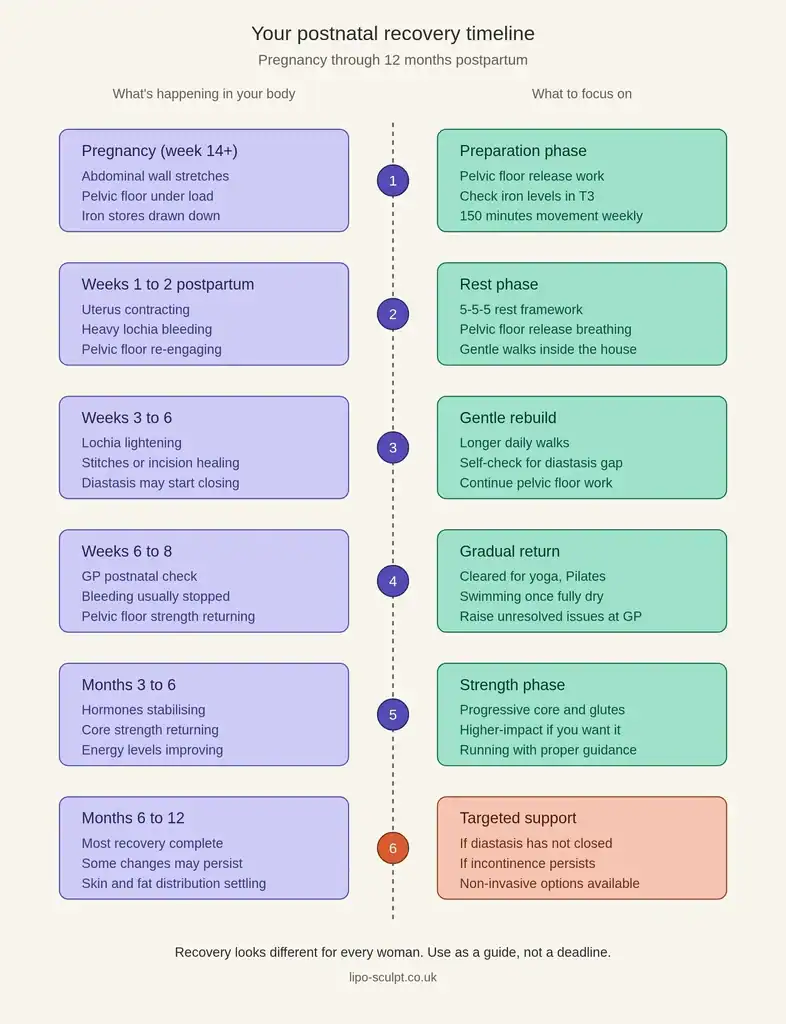
No two recoveries look alike, as the type of birth, her health going into it and support around her are all factors. Rough markers still help.
WEEKS 1-2 CONTRACTING UTERUS: Just walk around the house gently resting, feeding and breathing into your pelvic floor.
Weeks 3 – 6: lochia lightening, healing of stitches or caesarean incision. How to go for longer walks, keep pelvic floor in & self-check diastasis using the NHS method.
6–8 weeks: GP postnatal check, chance to raise anything unresolved. Exercise (light), cleared for gentle forms after bleeding completely stops — yoga, Pilates and swimming.
From Months 3 to 6: the woman you are becoming is feeling stronger and more established. Core stability and glute strength, slowly working back to higher-impact activity if you so choose.
Months 6 through 12: consolidation, rebuilding. This time should come when you have diastasis that hasn’t closed, stress incontinence that hasn’t resolved, and/or loose skin or stubborn fat that just won’t shift with exercise,, as this is when you need to look at targeted non-surgical treatment.
Compare yourself to no one else on your road to recovery.
Your Safe Step Forward : LipoSculpt Ossett
There are so many things you have trained little by little: The release of tension in your pelvic floor, the iron stores you have built up, the movement patterns that have been moving over and over, the support network you have created; these are literally all going to be what gets you through those weeks after baby is born.
This week, begin with just one thing. Get your iron levels checked at your next midwife appointment, book a women’s health physiotherapist assessment with LipoSculpt Ossett or exchange one lazy afternoon for a twenty-minute stroll around the block. Little pushes add up, and you’re out and about at 3am with a new born, will probably sip your coffee in peace, all thanks to these small moves.
It is what free consultations are for when you have either reached the summit of birth, and something is not aligning properly as it should. Spending a few hours at the keyboard yields fewer answers than an informed discussion with a skilled technician.
Questions to Ask About Faster Postnatal Recovery and How to Support Your Body ?
What is the 3-3-3 rule for postpartum reasons?
The 3-3-3 rule is a simplified version of the famous postpartum rest guideline: 5–5–5 — 3 days in bed, 3 days on the bed, 3 days around the bed. This is not a medical protocol but simply a roadmap to ensure the early recovery window is intact. 5-5-5 should seem more considerate for most everything — especially if she has support at home; 3-3-3 is the seater-cut version to return to light action earlier.
What can I do to get back on my feet faster?
You cannot MAKE someone recover, but you can help. It comes down to a few key factors: rest (particularly in the first two weeks), protein and iron, some gentle exercise every day, like walking, repeating pelvic floor work, and getting practical assistance with housework and older children. What you do before, a strong torso, well-trained pelvic floor and solid iron stores, is usually more important than anything that happens after.
How soon after birth can I exercise again?
Gentle walking and pelvic floor exercises can be done from within days following an uncomplicated vaginal birth, as soon as you feel well enough. Any more inflow should be postponed until your six-to-eight-week postnatal check. 10–12 weeks is a more realistic time to start low-impact exercise, especially if you had a caesarean or complications; talk to your GP or physiotherapist specifically about this.
Is exercise during pregnancy really help with faster recovery?
Yes, the evidence on this is very consistent. However, women who continue moderate exercise during pregnancy have shorter labours, less intervention, faster postnatal recovery (especially core strength and pelvic floor function), and better cardiovascular fitness than mothers who do not remain active. The keyword here is moderate: exercise that is safe and suitable for your pregnancy stage, preferably under the guidance of a prenatal professional.
What does the 5–3–1 rule mean in pregnancy?
The 5-3-1 is a guideline many clinicians employ for assessing late-pregnancy wellbeing — it means five movements in half an hour, three meals with snacks, and one assessment every day of the week on your own signs. This is not a protocol for the official NHS record, merely something that circulates among midwives as a mnemonic. This will, of course, differ based on the context in which you have heard it spoken, so if unsure, ask your midwife what they mean.
How long does my body take to recover post-pregnancy?
The NHS Ossett should arrange for a postnatal check between six and eight weeks after delivery, as most women have, in general terms, “covered” by that time. However, complete recovery, hormones and pelvic floor function, core strength and energy levels back to baseline, typically takes six to twelve months. Even lasting changes as a result of a caesarean or complicated birth, some women notice.
What does pregnancy recovery usually mean?
Pregnancy recovery generally means your body has returned to its state before pregnancy (post birth changes, hormonal, fluid retention, weight). Postpartum recovery is specifically the physical and mental healing process that occurs after birth, such as uterine contraction, pelvic floor recovery, tissue repair or adjustment to motherhood. They inevitably overlap, but postpartum does entail a specific kind of healing that pregnancy itself never required you to do.
Q: Is there anything I can do in pregnancy to prevent diastasis recti afterwards?
here seems to be some degree of separation of the abdominal wall in every pregnancy, so can you actually avoid it? But you can mitigate its severity and the speed of closure. Don’t do crunches and sit-ups during the second trimester; roll onto your side to get out of bed; do deep core breathing instead of bracing, and avoid lifting anything heavy above chest height.